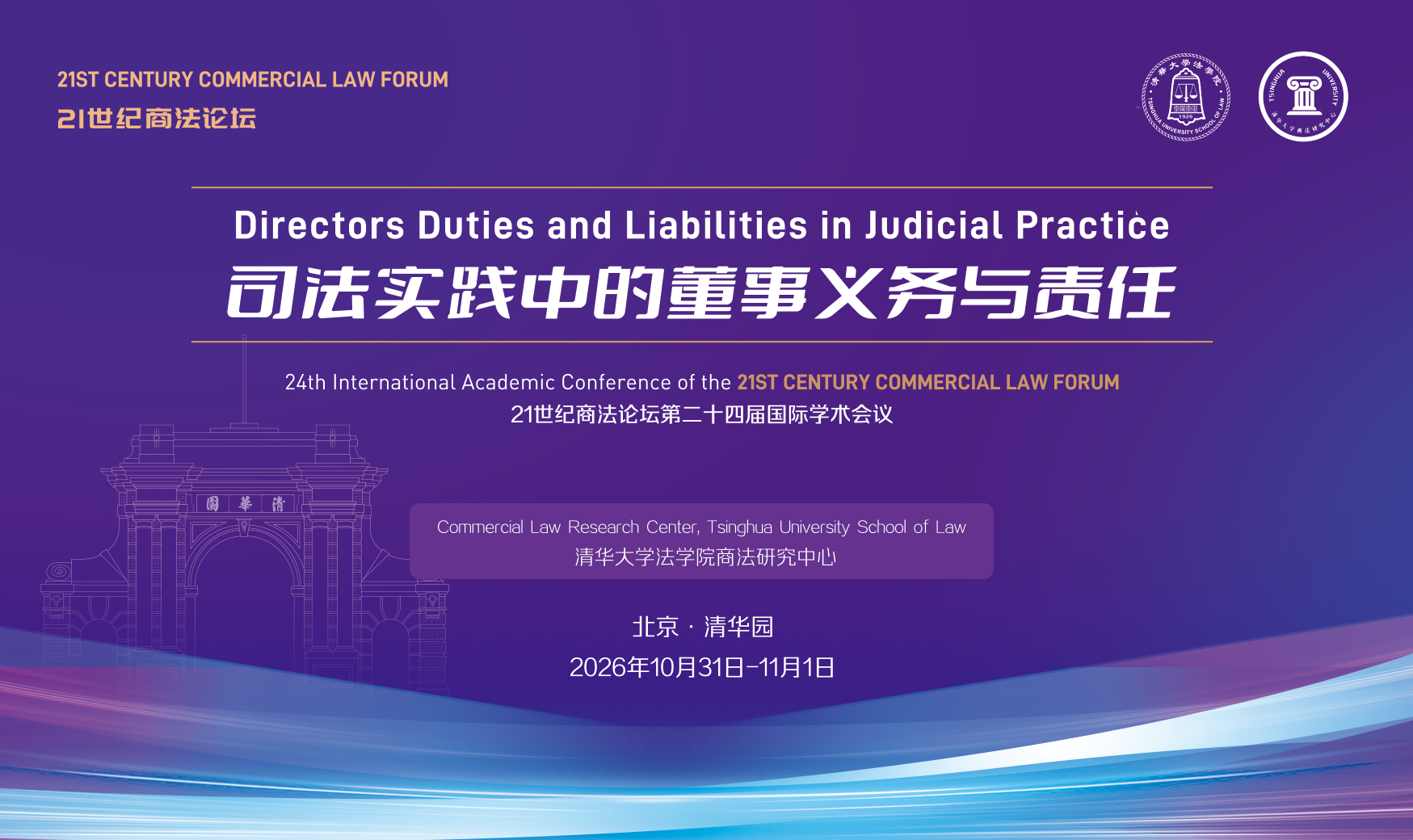
The 24th International Academic Conference of the 21st Century Commercial Law Forum was held from October 31 to November 1, 2026, at the Law Library of Tsinghua University. The conference, themed“Directors’Duties and Liabilities in Judicial Practice,” was hosted by the Commercial Law Research Center, Tsinghua University School of Law. The conference brought together more than 150 scholars and practitioners from universities, research institutions, and the legal profession. Participants came from the Chinese mainland, the Hong Kong and Macao Special Administrative Regions of China, and China’s Taiwan region, as well as from Germany, Australia, Singapore, Japan, South Korea, and other countries. Some participants joined the discussions online.
The conference featured seven sessions on four major topics. They covered the duties and liabilities of directors and senior management personnel in corporate operations, the duties and liabilities of controlling shareholders and actual controllers, the duties and liabilities of directors and senior management personnel in the context of capital inflows and outflows, and corporate bankruptcy, liquidation, and emerging issues in corporate finance. Scholars and practitioners from China and abroad were invited to give presentations and serve as discussants.
Professor Tang Xin of Tsinghua University School of Law, Director of the Commercial Law Research Center, chaired the opening ceremony. Professor Cui Guobin, Dean of Tsinghua University School of Law, delivered opening remarks, followed by Professor Zhao Xudong of the China University of Political Science and Law, President of the China Commercial Law Society. Professor Wang Chih-Cheng, Distinguished Professor of Research at National Chung Cheng University in China’s Taiwan region, spoke next, followed by Professor Zhu Ciyun of Tsinghua University School of Law, Honorary Director of the Commercial Law Research Center.
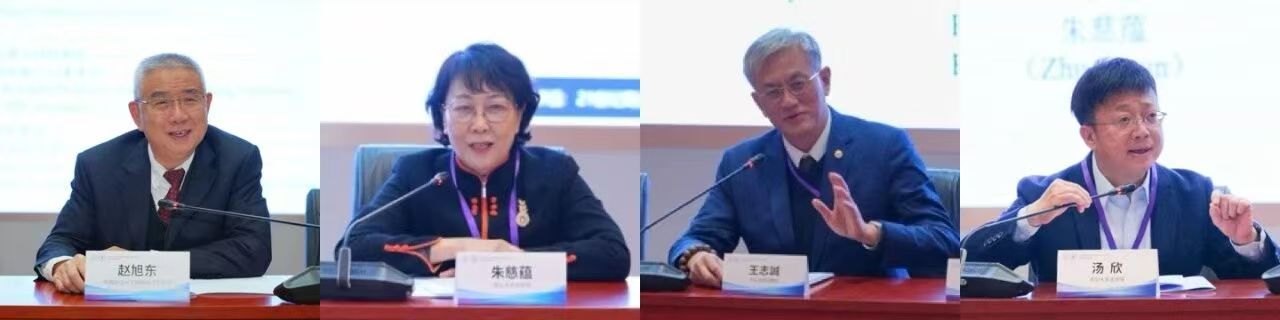
From left to right, Zhao Xudong, Zhu Ciyun, Wang Chih-Cheng, and Tang Xin.
Session 1 examined the legal foundations of directors’ duties and liabilities. Speakers considered how liability rules can hold directors accountable while allowing room for entrepreneurship. They also discussed target companies’ takeover defenses and the standards courts apply when reviewing directors’ conduct, the distinction between fiduciary duties and other rules governing directors, and the provisions on directors’ liability in the draft judicial interpretation of China’s Company Law. Comparative law presentations covered the European Union’s legal framework for companies, recent developments in directors’ duties in the United Kingdom and Singapore, and how different conceptions of the corporation shape the scope and interpretation of directors’ fiduciary duties.
Session 2 focused on directors’ liability to third parties and the interpretation and application of Article 191 of China’s Company Law. Speakers examined directors’ duties when companies face financial distress. They discussed how to identify the capacity in which a person acted when holding multiple corporate offices. They also distinguished between attributing conduct to the company and assessing a director’s personal liability. Drawing on experience in other jurisdictions, they discussed how courts determine directors’ liability to third parties, where its scope should be extended or limited, and how directors’ duties relate to liability.
Session 3 explored fiduciary duties, business judgment, and board oversight. The comparative discussion covered conflicts of interest and standards of review in Japan, directors’ duty to establish internal controls under Japanese law, and South Korea’s introduction of a duty of loyalty to shareholders and the questions it raises. Speakers also examined the purpose of the business judgment rule and how it might be applied in China, the liability of nominal directors for damages in cases involving de facto directors, the allocation of decision-making authority between the shareholders’ meeting and the board of directors in listed companies and its implications for directors’ fiduciary duties, and the limits of directors’ oversight duties.
Session 4 considered how artificial intelligence (AI) and environmental, social, and governance (ESG) issues affect directors’duties and liabilities. Speakers addressed accountability in corporate governance when companies use AI, directors’ duties of care and diligence when relying on AI in decision-making, and the scope of judicial review and liability. The discussion examined how technological developments affect corporate decisions and how directors carry out their duties. Other presentations covered corporate climate governance, liability for climate-related financial disclosures, directors’ duties in state-owned enterprises, and fiduciary duties in the context of government-driven corporate investment.
Session 5 examined the duties and liabilities of controlling shareholders and actual controllers. Speakers discussed the legal position of controlling shareholders, the organizational rules of company law governing actual controllers, and different legal avenues for holding controlling shareholders and actual controllers civilly liable. They also considered the role and liability of actual controllers in financial fraud cases involving listed companies. Presentations on shareholder activism, securities enforcement and changes in senior management, new rules on the duty of diligence, and shareholder primacy explored how the allocation of power in corporate governance relates to accountability.
Session 6 focused on the duties and liabilities of directors and senior management personnel in the context of capital inflows and outflows. Drawing on corporate capital rules and investment and financing practices, speakers examined directors’ duties in ensuring that the company receives the capital due to it, the forfeiture of equity interests corresponding to unpaid capital contributions and directors’ duties in that process, and directors’ responsibility for monitoring cash inflows. They also discussed directors’ liability in share redemptions, repurchases, and unlawful capital reductions. Other presentations considered valuation adjustments and exits through repurchases under valuation adjustment mechanism (VAM) agreements, as well as capital regulation for life insurers in China’s Taiwan region, including which items qualify as regulatory capital. The session examined how directors’ obligations and potential liability vary with the type of change in corporate capital.
Session 7 addressed corporate bankruptcy, liquidation, and emerging issues in corporate finance. Speakers examined directors’ liability to creditors of distressed companies, directors’ duties in liquidation, and their obligation to file for bankruptcy. They also considered the legal nature of directors’ liability to third parties and how the applicable rules can be tailored to different circumstances. The discussion also covered the role of financial law, legal responses to regulatory circumvention by financial firms, civil liability arising from public commitments in securities markets, and the narrative costs of corporate law.
The conference concluded on November 1 following two days of lively and collegial discussion. Tenured Associate Professor Shen Zhaohui of Tsinghua University School of Law chaired the closing ceremony. Professor Zhu Ciyun and Professor Tang Xin delivered closing remarks, thanking participants for attending, speakers and discussants for their contributions, and conference staff for their work. They invited participants to continue supporting the work of the Commercial Law Research Center and future international academic conferences of the 21st Century Commercial Law Forum.
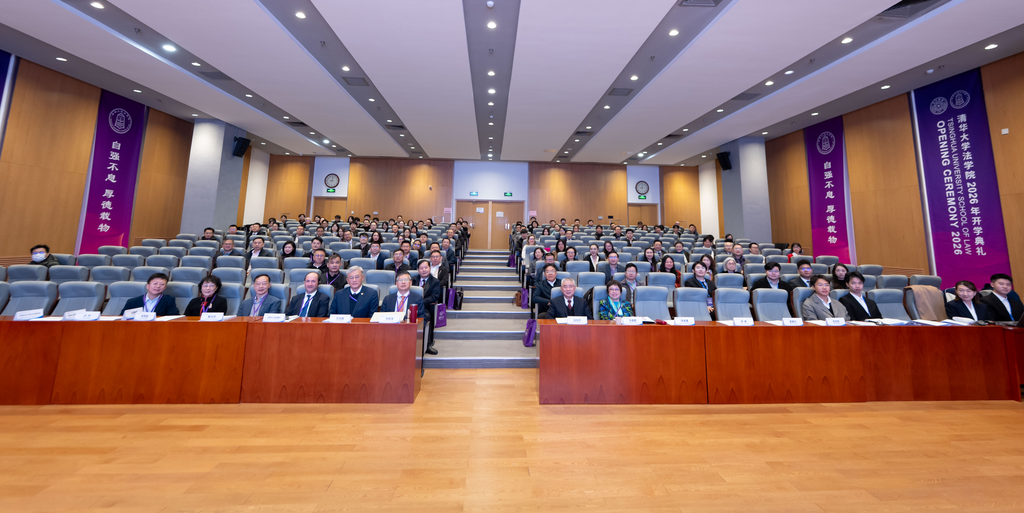
Group photograph of some conference participants.


 CN
